
Living Lab
Resource-Efficient Renovation Strategies for Research Facilities
Transfor:Maths
University buildings, research infrastructures, and institute buildings in Germany are suffering from a long-standing backlog of maintenance and repairs, leading to poor structural conditions, high energy consumption, and rising operating costs. The gap between the goal of sustainable, climate-neutral buildings at universities and research institutions and the reality is growing ever wider. Therefore, a comprehensive paradigm shift in how we manage our valuable building stock must be initiated.
The living lab serves as an experimental space for exploration in the old mathematics building at TU Berlin, dedicated to practice-oriented learning and research. The Natural Building Lab team will present the living lab concept and facilitate a collaborative discussion focused on networking and the development of potential research questions and learning formats.
Built in the 1980s based on the model of ecological glasshouse architecture and now a defining feature of the cityscape, the TU Berlin Mathematics Building is located on Straße des 17. Juni on the Charlottenburg campus. It is currently in dire need of renovation and offers great potential as a prototypical case study for pooling in-house expertise and generating synergies. The goal of the “Transfor:Mathe” real-world lab is to develop resource-efficient and cost-effective renovation strategies. These initiatives are intended to help accelerate the implementation of minimally invasive measures, make them transferable to other scientific buildings, and could serve as a model for the public construction sector.
The emerging research network of the real-world laboratory—comprising stakeholders within TU Berlin and beyond—is expected to develop new learning formats, explore new fields of research, and implement collaborative research proposals. The potential for new research lies in a wide variety of topics, such as sustainable and adaptable usage concepts, low-tech approaches, the circular use of materials, dealing with pollution, the architectural heritage value of 1980s architecture, and new operational and management models.
Click here for the project website, and here for the press release.
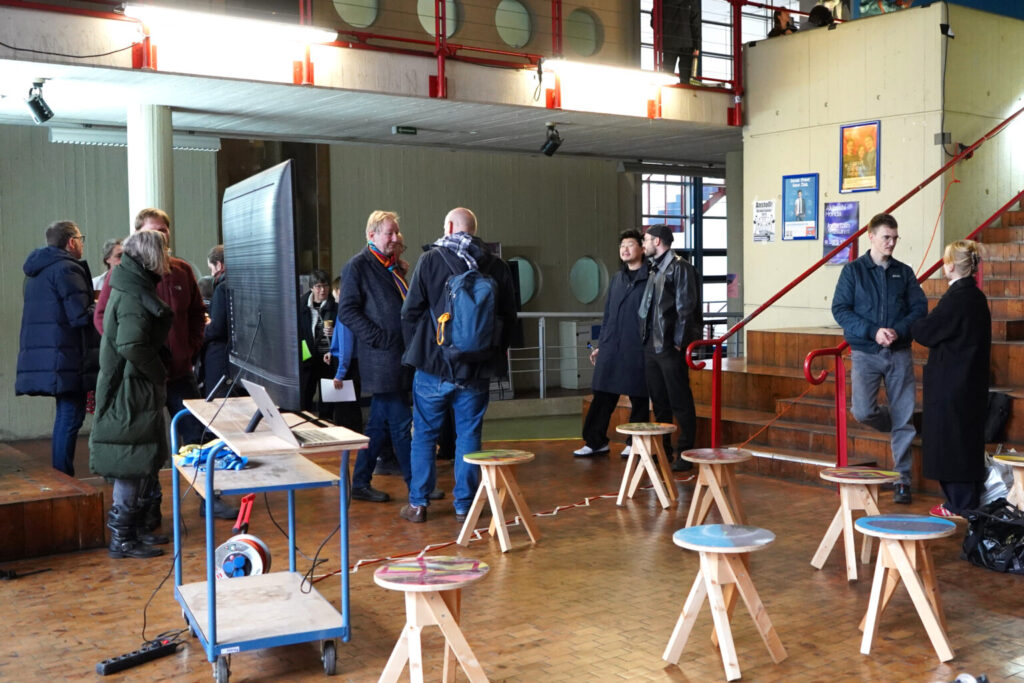
First living lab Network Meeting at the Mathematics Building of TU Berlin, Source: nbl.berlin/projects/
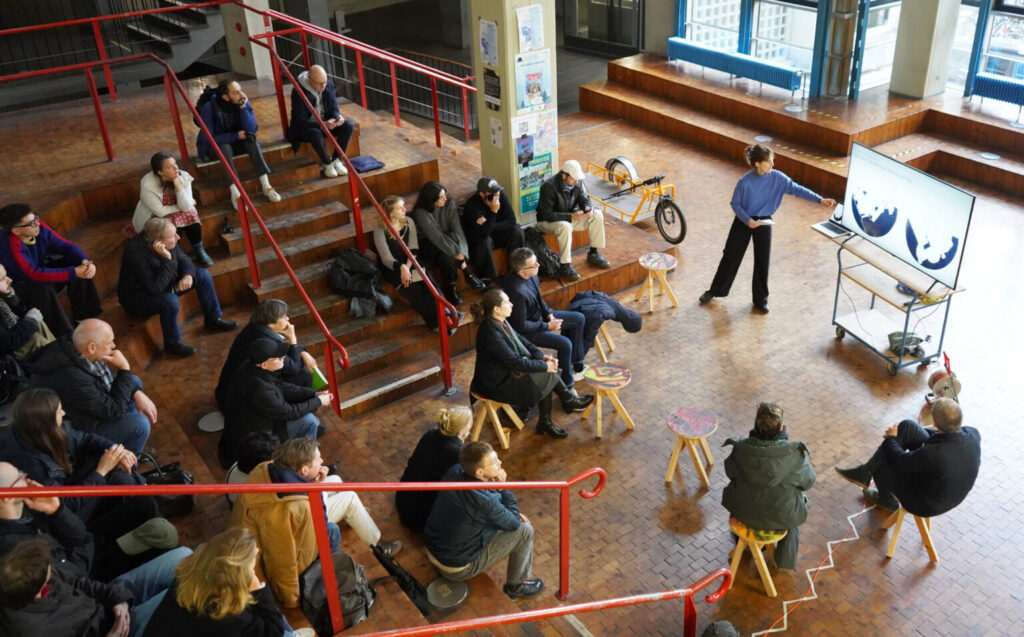
First Living Lab Network Meeting at the Mathematics Building of TU Berlin, Source: nbl.berlin/projects
Thematic Approaches:
#Circular Economy #Construction Transformation #Architecture
Spatial Approaches:
#Buildings #Neighborhood #Charlottenburg Campus
Project Website – Natural Building Lab – TU Berlin
Contact: Selina Schlez
Leave A Comment
You must be logged in to post a comment.